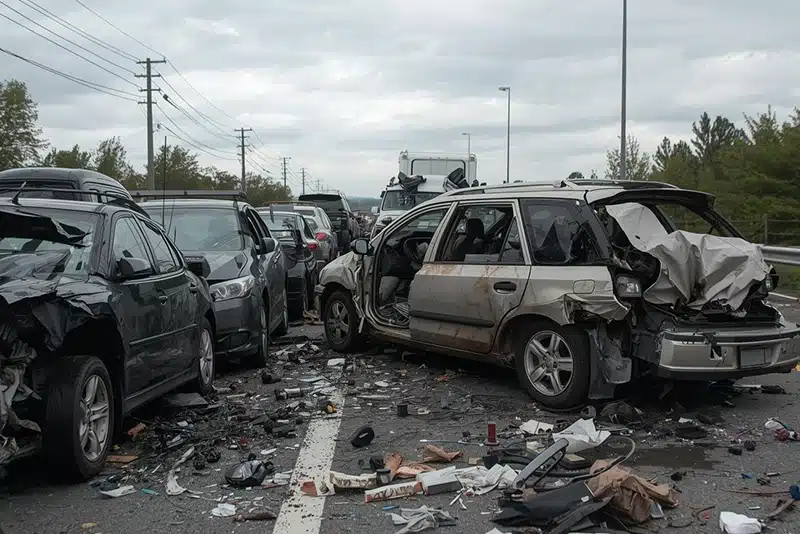
You are driving on the freeway when suddenly traffic comes to a sudden stop, and several cars collide in a chain reaction. In these stressful moments, knowing how to prove fault in multi-vehicle pileup accident cases becomes essential. Understanding fault is not just about blaming someone; it is about gathering the right evidence to show exactly what happened.
Multi-vehicle pileups can be confusing because many cars and drivers are involved. Factors like braking distance, speed, and weather conditions make determining fault in multi-vehicle accidents complicated.
This guide will help you understand what evidence to collect, how to use police reports and witness statements, and what legal steps you can take. With the right information, you can protect your rights and make sure liability is assigned fairly.
Step‑by‑Step Guide on How to Prove Fault in a Multi‑Vehicle Pileup Accident
When you’re dealing with the aftermath of a crash, knowing how to prove fault in multi‑vehicle pileup accident situations can feel overwhelming. You might be juggling medical bills, car repairs, and insurance calls all at once. But breaking the process into clear steps makes it easier to handle. This section explains what to do after the crash, how to document what happened, and how professionals help put the pieces together.
The first thing to understand is that proving fault isn’t about guessing who messed up. It’s about building a clear picture of what actually happened using facts. That means documenting the scene, understanding how fault and liability work, and working with insurance companies or attorneys to sort it all out.
Documenting the Scene Right Away
Right after a crash, your brain might feel foggy, but taking a few simple actions can make a big difference later on. Think of yourself as a “crime scene investigator” for your own accident. Here’s what to do:
- Take photos and videos of where each car ended up, any skid marks, and damage patterns on the vehicles. A picture of a skid mark that starts 20 feet before a bent bumper tells a story about speed and stopping distance.
- Note weather and road conditions, like whether it was raining or foggy. Weather can affect stopping time and might show whether drivers should have slowed down sooner.
- Get contact information from other drivers and any witnesses. A person who saw the crash unfold can help confirm what happened.
These steps help provide the evidence needed for later stages of fault determination.
Determining Fault in Multi‑Vehicle Accidents
At its core, “fault” means figuring out whose actions caused the crash. In simple two‑car accidents, you might clearly see one driver run a red light. But in a big freeway pileup, several cars can hit each other in rapid succession, and determining fault in multi‑vehicle accidents takes more careful work.
In many states, the law uses a system called comparative negligence in multi‑car accidents to decide fault. This means each driver’s actions are examined, and a percentage of responsibility is assigned to each one. Think of it like grading: if one driver was 70% responsible and another was 30% responsible, those numbers help decide who pays for what.
Sometimes people get confused between fault and liability. Fault is the actual cause, like someone not stopping in time, while liability is the legal responsibility to pay for the damage caused by that fault. Many states let you recover damages even if you share some fault, as long as you aren’t mostly responsible.
Understanding determining fault in multi‑vehicle accidents and how comparative negligence in multi‑car accidents works helps you know what evidence matters and why insurance companies and courts look at details like witness statements, police reports, and even traffic cam footage. The clearer your evidence, the stronger your case will be when it’s time to sort out responsibility.
Top Tips From Lawyers About Freeway Pileups
When you are dealing with a complex crash, determining liability in freeway pileups isn’t something you should try to handle alone. Lawyers who specialize in car accidents see scenes like these every week, and their advice can make a big difference in how smoothly your claim goes and how fair your outcome is.
Talk to a Lawyer Early
One of the first things experienced attorneys recommend is to hire an attorney early in the process, ideally soon after you’ve been checked by medical professionals and the crash has been reported to police and insurance. Waiting too long can mean important evidence gets lost, like traffic camera footage that gets overwritten or skid marks that fade, and without that, it’s harder to show what really happened. Lawyers know exactly what evidence to preserve and how to make sure it gets collected before it disappears.
Collect Evidence Right Away
Lawyers always tell clients to collect evidence immediately while the scene is still fresh and before the debris is cleared away by tow trucks or traffic crews. This includes taking photos or videos of vehicle positions, skid marks, weather conditions, and even nearby traffic signals. Those visual clues can explain how the crash unfolded to an insurance adjuster or judge later.
Consider this like taking pictures after a soccer game to show how the defense played — without that visual record, it’s just memories and opinions. With photos and videos, you have a timeline of the action.
Let Your Lawyer Handle Complex Evidence
In many freeway pileups, there are pieces of evidence that aren’t easy for a regular driver to gather on their own, like traffic camera footage, accident reconstruction reports, or data from a vehicle’s “black box.” Lawyers can request this kind of information and work with experts who know how to interpret it.
Lawyers Can Stand Up to Insurance Companies
Insurance companies often try to reduce what they pay out, especially when many drivers and insurers are involved. Attorneys know the tactics insurers use and how to push back. They prepare detailed arguments and organize all your evidence so the insurance company can’t easily brush aside your claim.
Think of a lawyer like a coach in a debate team: they help you prepare all your points and make sure nothing important is overlooked, so you present the strongest case possible.
Navigating Multi-Vehicle Pileups With a Freeway Injury Lawyer
Proving fault after a crash can feel confusing, especially when multiple cars are involved. Knowing how to prove fault in multi-vehicle pileup accident cases isn’t just about pointing fingers; it’s about gathering clear evidence, understanding who is responsible, and making sure your rights are protected. From taking photos at the scene to collecting witness statements in multi-vehicle accidents and using traffic camera evidence in freeway pileups, every step helps build a stronger case.
A professional attorney knows how to organize all this information, request accident reconstruction for pileup crashes, and work with insurers to ensure liability is assigned correctly.
If you or a loved one has been involved in a multi-car crash, don’t navigate this alone. Contact Freeway Injury Lawyer today to get expert guidance on determining liability in freeway pileups, collecting evidence, and protecting your rights every step of the way. Your claim deserves clarity, accuracy, and the best chance at fair compensation.
FAQs
1: What is the first step in proving fault in a multi-vehicle pileup?
The first step is to document the scene. Take photos, record vehicle positions, note road conditions, and collect contact information from drivers and witnesses. This evidence is critical for determining fault in multi-vehicle accidents.
2: How do police reports help in multi-car pileups?
Using police reports in multi-car pileups provides an official account of the crash. Reports often include officer observations, citations, and diagrams that help show which drivers were at fault.
3: Can witnesses really affect who is responsible in a crash?
Yes. Witness statements in multi-vehicle accidents give third-party perspectives that clarify what happened, which can be crucial in chain reaction or pileup scenarios.
4: What is comparative negligence in multi-car accidents?
Comparative negligence in multi-car accidents means each driver’s actions are assigned a percentage of fault. Even if you share some responsibility, you can often still recover partial compensation.
5: Why is accident reconstruction important?
Accident reconstruction for pileup crashes helps experts determine the sequence of collisions. It provides a scientific explanation of how and why the crash happened, which supports fault claims.
6: How can traffic camera evidence prove fault?
Traffic camera evidence in freeway pileups captures the crash in real time. These recordings can show which car caused the chain reaction and how other drivers responded.
7: What is ‘shared fault’ in multi-vehicle crashes?
Shared fault in multi-vehicle crashes occurs when multiple drivers contributed to the accident. Legal systems use percentages to assign responsibility and determine compensation.