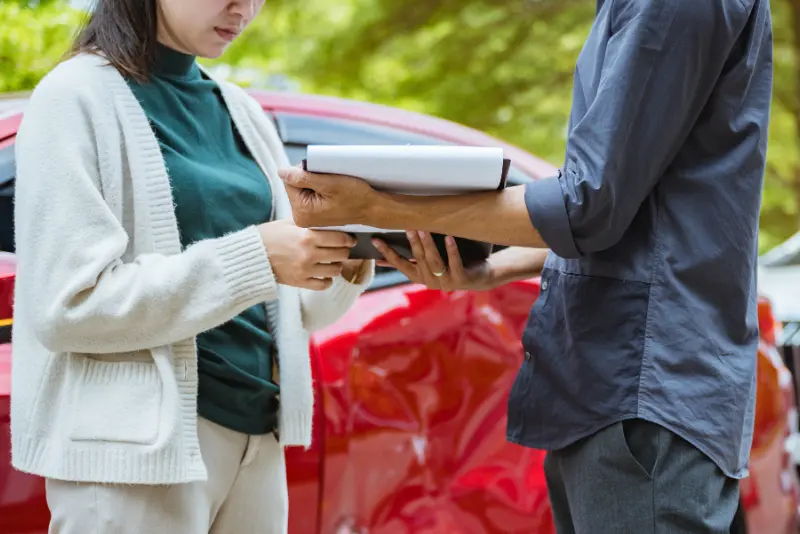
You’re driving on the freeway, traffic is flowing, and then suddenly there’s a crash. Later, you hear something that makes your stomach sink: “You might be partly at fault.” That’s when many people start asking the same question: What if I were partly responsible?
What surprises many drivers is that being partially at fault does not automatically prevent them from recovering compensation. In California, accident claims are governed by a comparative negligence system. According to the California Courts Self-Help Center, fault can be shared among multiple parties, and each person’s compensation is reduced by their percentage of responsibility rather than eliminated.
Think of it like splitting a restaurant bill based on what each person ordered. If two drivers both contributed to a collision, the law examines each driver’s role in causing the accident and assigns a percentage of fault to each. Even someone who is partially responsible may still recover damages, although the amount awarded will generally be reduced in proportion to their share of fault.
In practice, determining fault comes down to evidence. Police reports, witness statements, traffic camera footage, and other records can help establish what actually happened, rather than relying solely on competing versions of events.
Because every accident is unique, even small details can affect how fault is divided. That’s why the specific facts and supporting evidence often matter far more than assumptions made immediately after a crash.
Can You Still Recover Compensation If You Were Partly at Fault?
Yes, you can still recover compensation even if you were partly at fault. Imagine Maya crossing a street, glancing at her phone, and getting hit by a car. Even though she made a mistake, she is not automatically disqualified from recovery. Under California’s comparative negligence law, the court looks at how much each person contributed to the accident.
This is known as the percentage of fault, where responsibility is divided between both sides. If Maya is found 20% at fault, her damages are reduced by that portion, but she can still recover the remaining amount. So, a partial fault does not end a claim; it only changes the final compensation. This approach keeps outcomes fair by matching payment to actual responsibility.
Always document evidence carefully to protect your case and support your compensation claim in the court process effectively.
How Does Comparative Negligence Work?
When an accident happens, the law does not always pick just one person to blame. Instead, it uses comparative negligence, which is a way of sharing responsibility based on what each person did. Think of two kids running in a hallway. One bumps into the other, but the other was also running and not paying attention. Both contributed, so the fault is split.
In real cases, this split is called the percentage of fault. If one driver is 70% responsible and the other is 30%, their compensation is adjusted the same way.
Insurance companies usually investigate first. They look at photos, witness statements, and police reports. Lawyers then use this evidence to argue who caused more harm, and how much damage should be paid.
Sometimes even small details, like a traffic light camera, can change the outcome. The goal is to make the result as fair as possible for everyone involved.
What Types of Evidence Can Affect Fault?
Fault is decided based on what really happened, and different types of proof can change the outcome. Think of it like putting together pieces of a puzzle where each detail tells part of the story.
- Police reports: Officers write what they saw at the scene, which often becomes a key starting point for deciding fault.
- Witness statements: People who saw the accident can confirm who acted carelessly or broke the rules.
- Traffic camera or dashcam footage: Video evidence can clearly show the exact moment of impact.
- Photos from the accident scene: Images of road conditions, signals, and positions of vehicles help rebuild the event.
- Vehicle damage: The type and location of damage can reveal how the crash happened.
- Medical records: These show the seriousness of injuries and connect them to the accident.
- Expert accident reconstruction: Specialists use science to recreate how the crash likely occurred.
Strong evidence helps reduce unfair claims of fault by making the facts clearer and harder to dispute.
Common Situations Where Fault Is Shared
Fault is not always one person’s responsibility. In many real-life accidents, it gets split because more than one mistake happens at the same time.
- Car accidents: Two drivers may both be distracted or speeding, so responsibility is shared like two kids bumping into each other while not looking.
- Freeway accidents: In chain reactions, one sudden brake or unsafe merge can trigger multiple crashes, spreading fault across several drivers.
- Motorcycle accidents: Drivers often say they “didn’t see” the rider, while riders argue visibility issues, so both sides may share blame.
- Pedestrian accidents: Disputes over signals or crosswalk use can divide responsibility between the driver and the walker.
- Slip and fall cases: A store may miss a spill, but a visitor might also ignore warning signs, leading to shared negligence.
In all these cases, the law looks at each action carefully before deciding final responsibility.
What Should You Do If Someone Says You Were Partly at Fault?
If someone blames you after an accident, it can feel confusing and stressful, but your actions right away matter a lot. Think of it like protecting your side of the story before it gets mixed up.
- Do not admit fault at the scene: Even saying “I’m sorry” can be misunderstood as accepting fault, so stay calm and stick to facts.
- Seek medical treatment immediately: A doctor’s report helps connect your injuries to the accident clearly.
- Preserve photographs and evidence: Take pictures of cars, roads, and injuries before anything changes.
- Obtain witness contact information: Witnesses can later confirm what really happened.
- Avoid recorded statements without legal guidance: Insurance companies may use your words against you.
- Keep records of expenses and medical care: These documents show the real impact of your damages.
A real example is a small crash where photos later proved the other driver ran a red light, even after blaming both drivers.
Frequently Asked Questions About Freeway Accident Cases
Can I still get compensation if I was partly at fault?
Yes, under comparative negligence, you can still recover damages, but your share of fault reduces your compensation.
How is fault decided in an accident?
Fault is based on evidence like police reports, witness statements, photos, and sometimes expert analysis.
What if the insurance company blames me unfairly?
You can dispute their decision with stronger evidence or legal support to challenge the assigned fault.
Do I have to accept the first settlement offer?
No, first offers are often low, and you can negotiate for a fair amount based on your damages.
Should I admit fault at the accident scene?
No, it is best to avoid admitting fault until all facts are reviewed properly.
What if there are no witnesses?
Other evidence, like camera footage, vehicle damage, and photos, can still help prove your case.
Why Having a Freeway Injury Lawyer on Your Side Matters
When freeway accidents get complicated, we step in to make the process clearer and less overwhelming for you. We know how quickly a fault can be disputed, especially when multiple drivers, insurance companies, and conflicting stories are involved.
At Freeway Injury Lawyer, our role is to carefully review every detail, from police reports and witness statements to photos and medical records, so we can build a strong picture of what really happened. We also handle communication with insurance companies, so you do not have to worry about saying the wrong thing or being pressured into a low settlement.
Our goal is to ensure your damages are fully understood and fairly valued, even in shared-fault situations. If you are unsure about your case or think you might be partly at fault, reach out to us today. We will review your situation and help you understand your next best step.